Academics
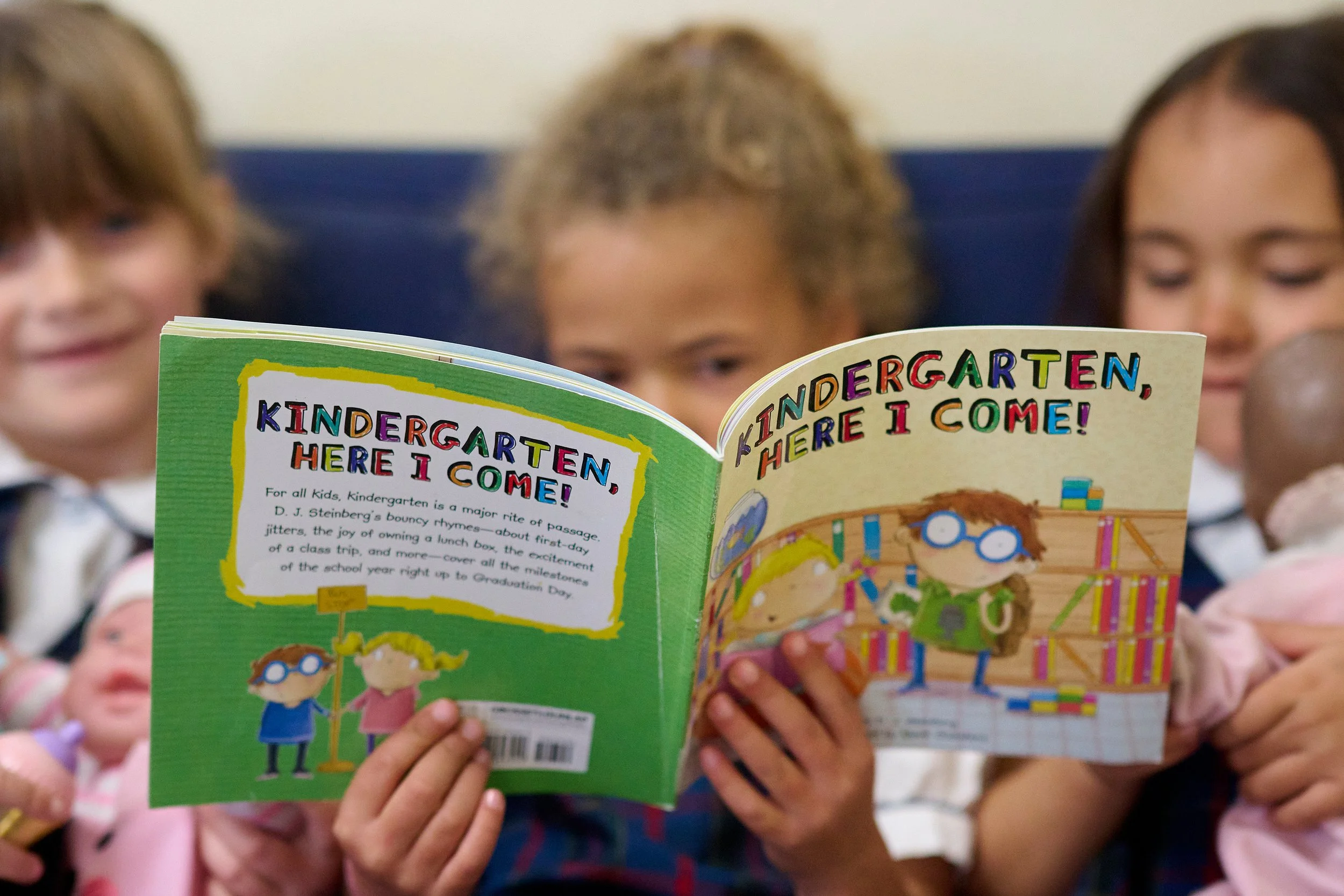
Elementary (k - 5)
Religion
Building a foundational understanding of Scripture, Catholic traditions, prayer, and the sacraments. Lessons emphasize moral decision-making, virtue formation, and developing a personal relationship with Christ.
English Language Arts
Students develop strong phonics, fluency, reading comprehension, grammar, and writing mechanics. They are introduced to paragraph structure, narrative writing, and early research skills.
Mathematics
Instruction focuses on number sense, computational fluency, and conceptual understanding. Students master foundational operations, fractions, measurement, and problem-solving strategies.
Science
Through hands-on exploration, play, and guided inquiry, students study life science, earth science, and physical science.
Social Studies
Explore communities, geography, American history, and global cultures.
Technology, Art, Music & Physical Education
Development of digital literacy, creative expression, and physical coordination. These subjects reinforce discipline, collaboration, and confidence while supporting whole-child development.
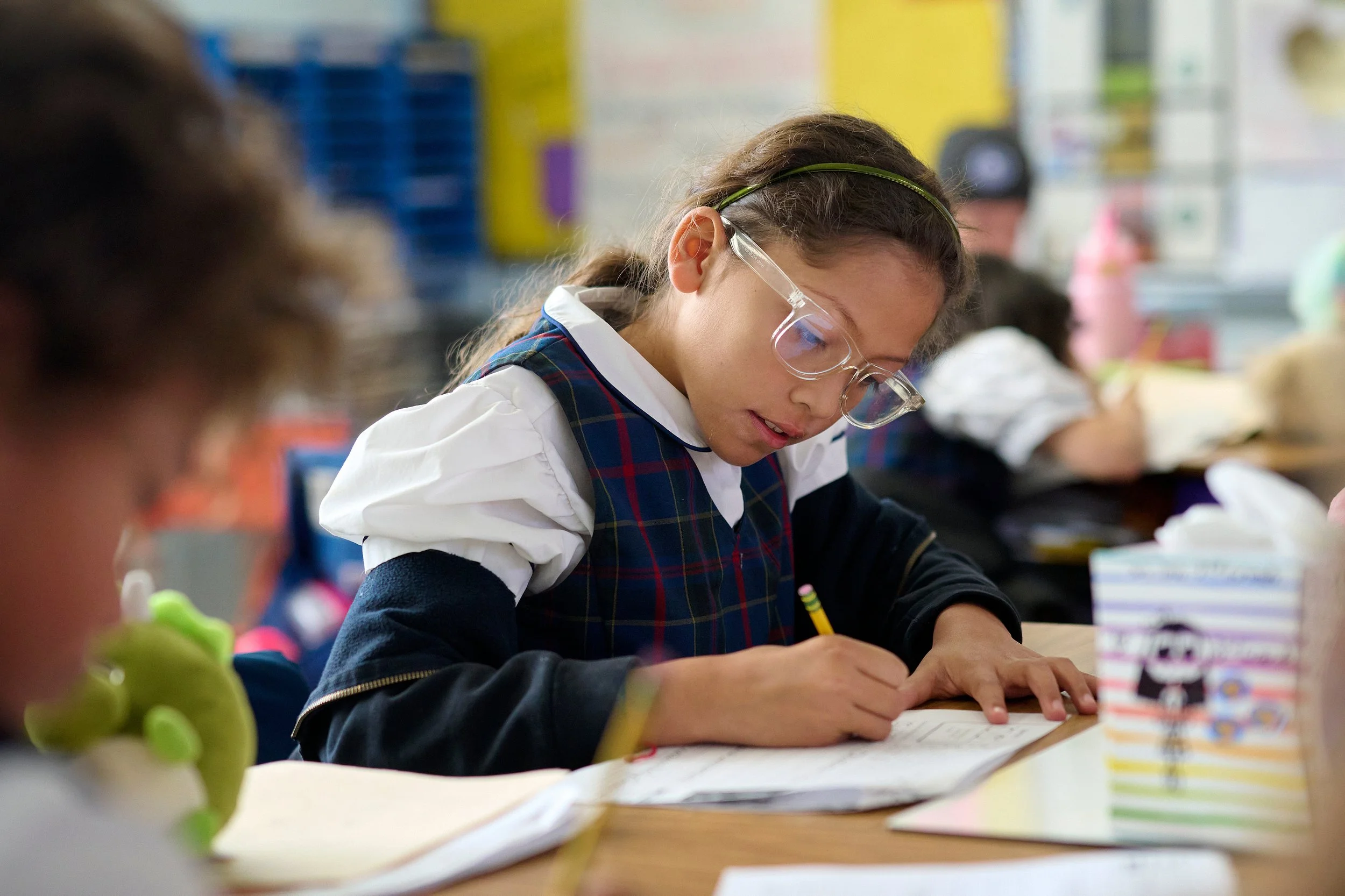
middle school (6 - 8)
Religion
Engaging more deeply with Sacred Scripture, Church history, apologetics, and moral theology. They analyze ethical issues, defend their understanding of Catholic teachings, and participate in service learning that connects faith to action.
English Language Arts
Refining analytical reading and persuasive writing skills. We’ll evaluate literary devices, author intent, and thematic complexity across classic and contemporary works. Formal essays, research papers, structured debates, and oral presentations prepare students for advanced high school expectations.
Mathematics
Progression through advanced mathematical concepts including pre-algebra, algebraic reasoning, and higher-level problem solving. Emphasis is placed on abstract thinking, multi-step problem solving, and mathematical justification. Accelerated pathways are available for advanced learners.
Science
Engaging in laboratory work across life, physical, and earth sciences. Instruction emphasizes hypothesis formation, experimentation, data analysis, and scientific argumentation. STEM integration strengthens real-world application and critical thinking.
Social Studies / History
Deeper historical analysis using primary sources, document-based questions, and research projects. Students examine global systems, American government, economics, and the moral implications of historical events, strengthening civic awareness and critical reasoning.
Technology, Fine Arts & Physical Education
The development of advanced digital research skills, presentation mastery, responsible online citizenship, and introductory coding. Fine arts emphasize technique and theory, while physical education fosters leadership, endurance, and sportsmanship.
Classical Liberal Catholic Education
Classical Liberal Catholic Education dates back to ancient Greece and Rome and was refined by early Christian thinkers. It has been fully developed through the intellectual life of the Catholic Church.
The word liberal comes from the Latin liber, meaning “free.” A liberal education is therefore an education ordered toward freedom, the freedom that comes from knowing truth, thinking clearly, and living virtuously. This model is structured around the Trivium (Grammar, Logic, and Rhetoric) and the Quadrivium (Arithmetic, Geometry, Music, and Astronomy.)
While these disciplines have faded throughout Catholic Education over the years, there is a resurgence of this traditional model as it forms the foundation of intellectual formation in Catholic schools. St. Mary, Star of the Sea Catholic school has begun to integrate Classical Liberal Catholic Education as one of our many differentiators in making us one of the best private schools in Southern California and North County San Diego.
This Model Emphasizes:
Mastery of language and clear expression
Logical reasoning and critical analysis
Encounter with primary texts and great works
Moral formation and cultivation of virtue
The unity of knowledge across disciplines
Education as formation of the whole person
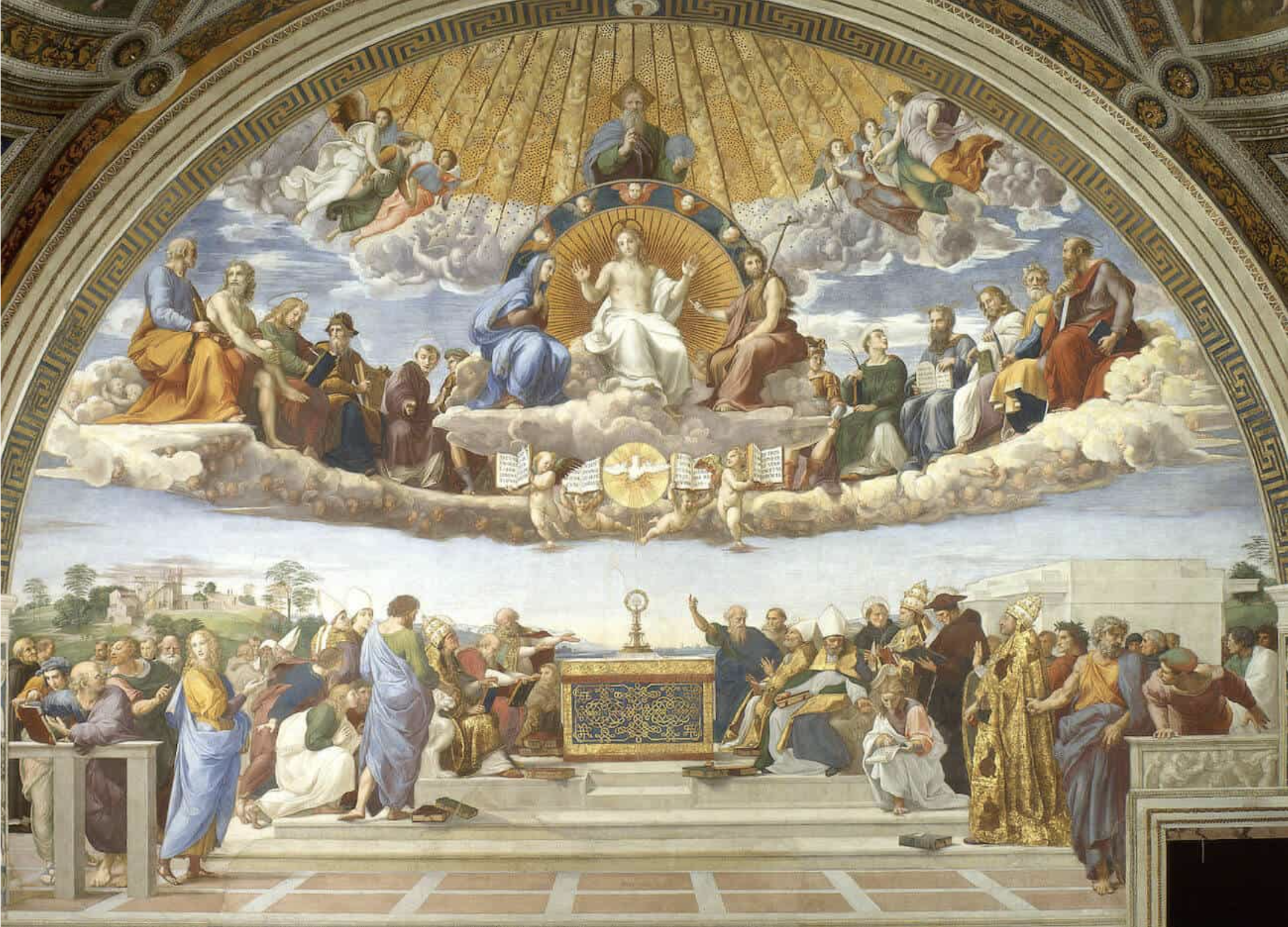
Raphael's Disputation of the Holy Sacrament (c. 1510) represents the pinnacle of theological education and illustrates the Renaissance humanist ideal of uniting classical reason (philosophy) with divine revelation (faith). It portrays scholars and theologians actively studying to understand divine truths.The Trivium in Practice
Grammar Stage (Elementary Years)
In the early grades, students build strong foundations in language, mathematics, and content knowledge. This is a time of joyful memorization, skill mastery, and wonder.
Students develop robust phonics, vocabulary, and grammar.
Catechesis focuses on Scripture, prayer, and core teachings of the Church.
Mathematics emphasizes computational fluency and conceptual understanding.
History and science build a broad base of factual knowledge that supports later analysis.
The goal is not rote learning alone, but equipping students with the building blocks necessary for higher reasoning.
Logic Stage (Middle School Years)
As students mature intellectually, they begin to analyze, question, and reason more deeply.
Students study formal and informal logic, learning how to construct and evaluate arguments.
Literature study shifts from comprehension to interpretation and thematic analysis.
History includes primary source engagement and cause-and-effect reasoning.
Science instruction emphasizes hypothesis formation, experimentation, and data analysis.
Mathematical studies move into abstract reasoning and algebraic thinking.
Students are challenged to defend their ideas respectfully and thoughtfully.
Rhetoric Stage (Upper Middle School Preparation)
In the upper grades, students learn to communicate truth clearly and persuasively.
Writing becomes more structured and argumentative.
Oral presentations, debates, and discussions refine public speaking skills.
Research projects require synthesis across disciplines.
Students articulate moral reasoning grounded in Catholic teaching.
The goal is confident, articulate young leaders who can express truth with clarity and charity.